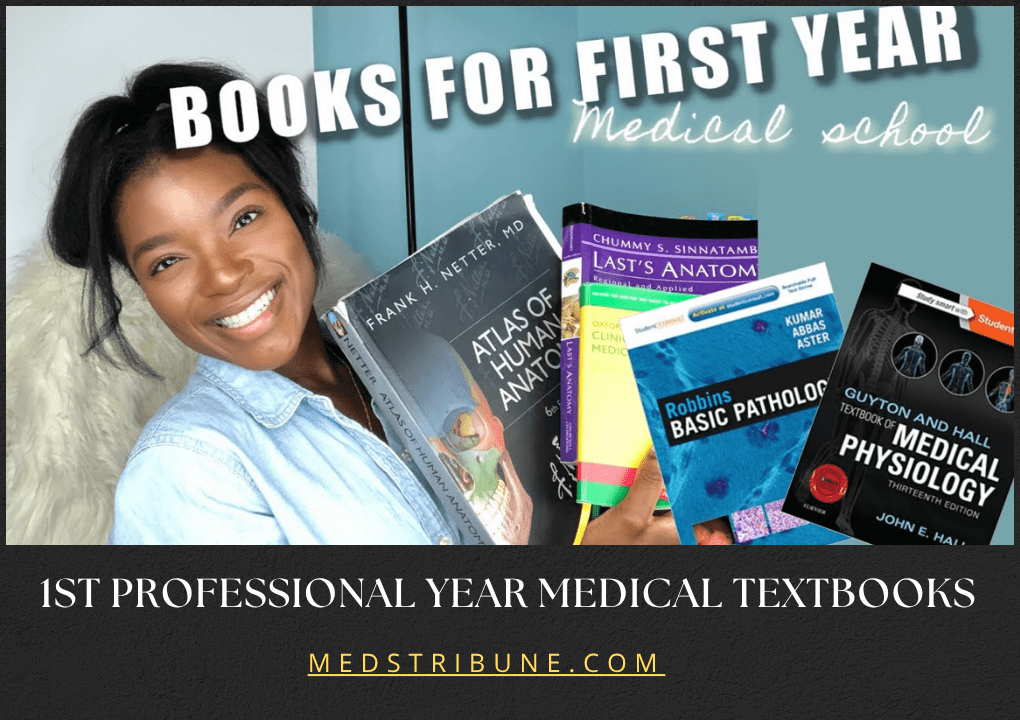
1st Professional Year Medical Textbooks: A Comprehensive Guide
The first professional year of medical school is one of the most foundational and rigorous phases of a medical student’s journey. This year is designed to provide students with the essential knowledge required for their future practice as doctors. During this year, students focus primarily on basic medical sciences such as anatomy, physiology, biochemistry, pharmacology, and pathology. The 1st Professional Year Medical Textbooks used during this phase play a pivotal role in ensuring students have a solid understanding of these subjects.
In this article, we will discuss some of the most important textbooks for the 1st Professional Year Medical Textbooks, which will help students navigate the complexities of medical sciences and excel in their studies.
Key 1st Professional Year Medical Textbooks for Medical Students
1. Anatomy: Gray’s Anatomy for Students
Gray’s Anatomy for Students is one of the most comprehensive and widely used textbooks for learning human anatomy. This book is designed specifically for medical students and is often recommended as the core textbook for anatomy in the first year.
Features:
- Detailed and accurate illustrations of human anatomy
- Clear, easy-to-understand descriptions of anatomical structures
- Clinical correlations that show the relevance of anatomy in medical practice
- Updated with the latest research on human anatomy
This book will guide you through the human body, providing essential knowledge that will be used in clinical practice throughout your medical career.
2. Physiology: Guyton and Hall Textbook of Medical Physiology
Guyton and Hall Textbook of Medical Physiology is a staple in medical physiology education. The book presents the subject in a logical, systematic manner, covering the fundamentals of human physiology.
Features:
- Comprehensive coverage of all physiological systems (cardiovascular, respiratory, gastrointestinal, renal, etc.)
- Clinical insights that connect physiology with clinical practice
- Clear diagrams and illustrations that aid in understanding complex processes
- A student-friendly approach with simplified explanations for challenging concepts
Guyton and Hall is often considered the gold standard in physiology textbooks, providing first-year medical students with a solid foundation in understanding the functions of the human body.
3. Biochemistry: Lehninger Principles of Biochemistry
Biochemistry is another core subject in the first year of medical school. Lehninger Principles of Biochemistry is one of the most widely used biochemistry textbooks and provides a comprehensive and engaging explanation of biochemical concepts.
Features:
- In-depth explanations of biochemistry, molecular biology, and cellular processes
- Emphasis on the clinical relevance of biochemistry
- Well-illustrated with diagrams and tables to aid understanding
- Includes current research and updates in biochemistry
This book is crucial for medical students to understand the molecular basis of life and disease, and it offers a solid foundation in biochemistry for later clinical years.
4. Pharmacology: Basic and Clinical Pharmacology by Bertram Katzung
Basic and Clinical Pharmacology by Bertram Katzung is a highly regarded pharmacology textbook that is used in many medical schools around the world. Pharmacology is the study of how drugs work in the body, and this book covers both the theoretical and clinical aspects of the subject.
Features:
- A thorough overview of pharmacology, including the mechanisms of action, therapeutic uses, and side effects of drugs
- Clear explanations of drug interactions and their effects on different body systems
- Clinical case studies that demonstrate the application of pharmacology in patient care
- Updated content reflecting the latest advancements in pharmacology
Katzung’s textbook is widely regarded for its clear writing and organization, making it a crucial resource for first-year medical students who are learning the complexities of pharmacology.
5. Pathology: Robbins Basic Pathology
Robbins Basic Pathology is one of the leading textbooks in the field of pathology, which is the study of disease mechanisms. It is an essential resource for students who want to understand how diseases develop and affect the body.
Features:
- Detailed coverage of cellular injury, inflammation, and neoplasia
- Clear explanations of disease processes in various organs and systems
- High-quality illustrations and images that demonstrate pathological changes
- Integration of molecular and genetic aspects of pathology
This textbook is invaluable for first-year medical students, as it provides foundational knowledge that will be essential for understanding disease in later years of medical education.
6. Microbiology: Medical Microbiology by Murray, Rosenthal, and Pfaller
Medical Microbiology by Murray, Rosenthal, and Pfaller is one of the most important textbooks in the study of microbiology, covering essential concepts related to microorganisms and infections.
Features:
- Detailed and systematic coverage of bacteria, viruses, fungi, and parasites
- Clear illustrations and tables to help identify different microbes
- In-depth discussion of microbial pathogenesis, diagnosis, and treatment
- Focus on clinical relevance and antimicrobial therapy
Microbiology is a vital subject for first-year students as it lays the groundwork for understanding infectious diseases and the principles of infection control.
7. Embryology: Langman’s Medical Embryology
Langman’s Medical Embryology provides a clear and detailed explanation of human development and embryology, helping students understand the complex process of fetal development.
Features:
- Clear, concise chapters with updated content reflecting modern embryology
- Easy-to-understand explanations of the stages of human development
- Numerous diagrams and illustrations that depict embryonic development
- Clinical correlations linking embryology with congenital diseases
This textbook is a fundamental resource in understanding how the human body develops from conception through birth and its clinical implications.
Importance of 1st Professional Year Medical Textbooks for Medical Students
The textbooks listed above are essential tools for first-year medical students to develop a strong foundation in basic medical sciences. These subjects—anatomy, physiology, biochemistry, pharmacology, pathology, microbiology, and embryology—are integral to understanding human health and disease. A good grasp of these subjects will serve as a springboard for clinical practice in later years.
Study Tips for First-Year Medical Students
- Time Management: The amount of information in these textbooks can be overwhelming. Create a study schedule that allows you to cover each subject in-depth, while also leaving time for review and practice.
- Active Learning: Don’t just passively read through textbooks. Engage in active learning by making notes, creating flashcards, and testing yourself regularly.
- Use Diagrams and Illustrations: Many of these textbooks contain important diagrams, charts, and images. These can be incredibly helpful for visual learners and are key for subjects like anatomy and pathology.
- Group Study: Some topics, like pathology and pharmacology, can be complicated. Discussing and learning with classmates can help clarify complex concepts and improve your understanding.
- Regular Review: First-year medical students often find that subjects build upon one another. It is important to review regularly to ensure retention and understanding of foundational knowledge.
Conclusion
The first professional year of medical school is a crucial phase that sets the stage for future clinical practice. 1st Professional Year Medical Textbooks such as Gray’s Anatomy, Guyton and Hall Textbook of Medical Physiology, Lehninger Principles of Biochemistry, and others are essential resources for building a solid foundation in basic medical sciences. By utilizing these textbooks effectively, students can develop the knowledge and skills needed to excel in their medical education and future careers as doctors.